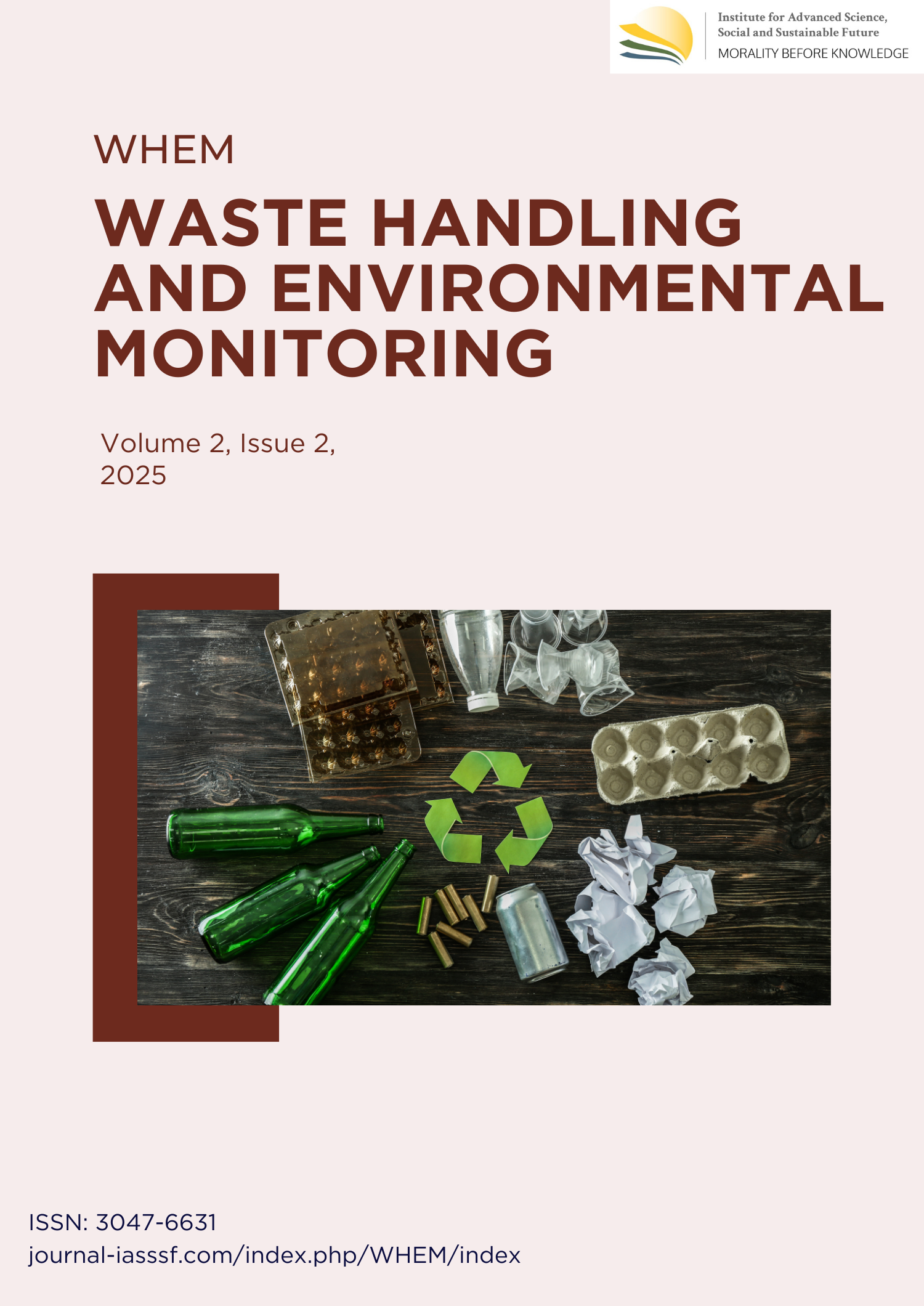
Public acceptance and cost-benefit analysis: Incinerators vs. third-party providers
DOI:
https://doi.org/10.61511/whem.v2i2.2025.4300Keywords:
B3 medical waste, cost-benefit analysis, hospital waste, incinerator, public acceptanceAbstract
Background: The management of hazardous solid medical waste (B3) poses a challenge for hospitals in South Tangerang City, as no hospital in the area currently has its own on-site treatment facilities, meaning Hospital X still relies on third-party providers (outsourcing). Method: Employing a mixed-methods case study design, this research examines public acceptance of on-site incinerators through statistical association analysis (involving six key informants) and evaluates financial feasibility via a cost-benefit analysis (CBA) using three years of secondary budget data (2023–2025). Financial metrics—evaluated at a 10% discount rate across three CAPEX sensitivity scenarios, include Net Present Value (NPV) and Benefit-Cost Ratio (BCR). Findings: The results indicate that storage and processing aspects are significantly associated with community acceptance (p = 0.044, OR = 1.661; p = 0.034, OR = 2.538). Although the standalone incinerator generated a positive NPV over the 3-year horizon, its BCR remained below 1, whereas outsourcing resulted in cumulative savings of approximately IDR 241 million. Conclusion: Given low waste volumes, outsourcing is more economically rational, while public acceptance depends more on proper storage and treatment practices than technology choice. Novelty/Originality of this article: This study integrates social acceptance and financial feasibility within a single framework, offering practical, economically viable, and socially acceptable decision insights to guide hospital decision making in developing urban contexts, subject to a three year budget horizon limitation.
References
Absori, A., & Latif, M. (2020). Kebijakan hukum dalam pengelolaan limbah bahan berbahaya dan beracun (B3): Studi implementasi pengelolaan limbah medis di rumah sakit Salatiga. JIL : Journal of Indonesian Law, 1(1), 91–117. https://doi.org/10.18326/jil.v1i1.91-117
Al-Sulbi, K., Chaurasia, P. K., Attaallah, A., Agrawal, A., Pandey, D., Verma, V. R., Kumar, V., & Ansari, M. T. J. (2023). A fuzzy TOPSIS-based approach for comprehensive evaluation of bio-medical waste management: Advancing sustainability and decision-making. Sustainability (Switzerland), 15(16). https://doi.org/10.3390/su151612565
Ananda, F. I., & Nugroho, A. Y. (2022). Analisis kelayakan bisnis thrift shop Susecond.id di masa pandemi covid 19 dengan menggunakan metode cost benefit analysis. Jurnal Cakrawala Ilmiah (JCI), 1(10), 2609–2616. http://bajangjournal.com/index.php/JCI
Arumdani, I. S., Ilma, K., Salsabila, R. A., & Nurany, H. (2025). Analysis of hazardous and toxic solid medical waste management in Purworejo hospital. Jurnal Manajemen Kesehatan Indonesia, 13(3), 294-301. https://doi.org/10.14710/jmki.13.3.2025.294-301
Attrah, M., Elmanadely, A., Akter, D., & Rene, E. R. (2022). A review on medical waste management: treatment, recycling, and disposal options. Environments, 9(11), 146. https://doi.org/10.3390/environments9110146
Aung, T. S., Luan, S., & Xu, Q. (2019). Application of multi-criteria-decision approach for the analysis of medical waste management systems in Myanmar. Journal of Cleaner Production, 222, 733–745. https://doi.org/10.1016/j.jclepro.2019.03.049
Bai, Z., Liu, X., & Ma, W. (2024). Public attitudes toward medical waste: Experiences from 141 countries. PloS one, 19(5), e0302498. https://doi.org/10.1371/journal.pone.0302498
Brent R. J. (2023). Cost-benefit analysis versus cost-effectiveness analysis from a societal perspective in healthcare. International journal of environmental research and public health, 20(5), 4637. https://doi.org/10.3390/ijerph20054637
Chelli, A., Brander, L., & Geneletti, D. (2025). Cost-Benefit analysis of urban nature-based solutions: A systematic review of approaches and scales with a focus on benefit valuation. Ecosystem Services, 71, 101684. https://doi.org/10.1016/j.ecoser.2024.101684
Common, M., & Stagl, S. (2005). Ecological economics: An introduction. Cambridge University Press.
Geetha, S., Narayanamoorthy, S., Kang, D., & Kureethara, J. V. (2019). A novel assessment of healthcare waste disposal methods: Intuitionistic hesitant fuzzy multimoora decision making approach. IEEE Access, 7, 130283–130299. https://doi.org/10.1109/ACCESS.2019.2940540
Giatman, M. (2011). Ekonomi teknik (A. Aliludin, Ed.; 1st ed.). Rajawali.
Godfrey, L. (2021). Waste management practices in developing countries (p. 230). MDPI-Multidisciplinary Digital Publishing Institute.
Hasan, M. M., Haque, R., Jahirul, M. I., & Rasul, M. G. (2025). Pyrolysis of plastic waste for sustainable energy recovery: Technological advancements and environmental impacts. Energy Conversion and Management, 326. https://doi.org/10.1016/j.enconman.2025.119511
Hinduja, A., & Pandey, M. (2019). Assessment of healthcare waste treatment alternatives using an integrated decision support framework. International Journal of Computational Intelligence Systems, 12(1), 318–333. https://doi.org/10.2991/ijcis.2018.125905685
Hutajulu, S. M., Marsaulina, I., Siregar, F. A., Indirawati, M., & Utami, T. N. (2021). Environmental impact and cost analysis of solid medical waste treatment in hospitals. Volatiles & Essent. Oils, 8(4). https://doi.org/10.2174/18749445-v15-e221223-2022-152
International Labour Organization. (2014). Global estimates of the burden of injury and illness at work in 2012. International Labour Office. https://www.ilo.org/
Jondabeh, S. G., Dana, T., Robati, M., Abedi, Z., & Golbabaei, F. (2024). An integrated approach for economic evaluation of environmental and health costs of occupational diseases in the oil industry. Scientific Reports, 14(1). https://doi.org/10.1038/s41598-024-67732-0
Keeble, B. R. (1988). The brundtland report: “Our common future.” Medicine and War, 4(1), 17–25. https://doi.org/10.1080/07488008808408783
Kollu, V. K. R., Kumar, P., & Gautam, K. (2022). Comparison of microwave and autoclave treatment for biomedical waste disinfection. Systems microbiology and biomanufacturing, 2(4), 732–742. https://doi.org/10.1007/s43393-022-00101-y
Kurniawan, B. (2019). Pengawasan pengelolaan limbah bahan berbahaya dan beracun (B3) di Indonesia dan tantangannya. Dinamika Governance, 09, 1–23. https://doi.org/10.33005/jdg.v9i1.1424
Li, W., Zhong, H., Jing, N., & Fan, L. (2019). Research on the impact factors of public acceptance towards NIMBY facilities in China-A case study on hazardous chemicals factory. Habitat International, 83, 11-19. https://doi.org/10.1016/j.habitatint.2018.10.011
Li, Z., Jia, X., Jin, H., Ma, L., Xu, C., & Wei, H. (2021). Determining optimal municipal solid waste management scenario based on best-worst method. Journal of Environmental Engineering and Landscape Management, 29(2), 150–161. https://doi.org/10.3846/jeelm.2021.14843
McKinnon, R., Brimblecombe, S., McClanahan, S., & Orton, I. (2014), Revisiting ISSA's dynamic social Security: 2007–2014, and beyond. International Social Security Review, 67(3-4), 17-36. https://doi.org/10.1111/issr.12046
Nematollahi, H., Tuysserkani, M., & Nematollahi, A. (2025). Medical waste management in the modern healthcare era: A comprehensive review of technologies, environmental impact, and sustainable practices. Results in Engineering, 107210. https://doi.org/10.1016/j.rineng.2025.107210
Pacheco, G. C. R., & Alves, C. de M. A. (2025). A framework to evaluate the performance of urban rainwater harvesting systems considering water and sanitation utility perspectives under deep uncertainties. Water Resources Management, 39(13), 6823–6840. https://doi.org/10.1007/s11269-025-04278-4
Puška, A., Stević, Ž., & Pamučar, D. (2022). Evaluation and selection of healthcare waste incinerators using extended sustainability criteria and multi-criteria analysis methods. Environment, Development and Sustainability, 24(9), 11195–11225. https://doi.org/10.1007/s10668-021-01902-2
Rusliana, N., Kadarisman, E., & Sukarso, A. (2022). Analisis dampak keberadaan tempat pembuangan sampah akhir ciangir terhadap peningkatan ekonomi di Kecamatan Tamansari Kota Tasikmalaya. Jurnal Ilmu Ekonomi, 3(1). https://doi.org/10.37058/wlfr.v3i1.4187
Sharifi, S., Yaghmaeian, K., Golbaz, S., Nabizadeh, R., & Baghani, A. N. (2024). Economic evaluation of hazardous healthcare waste treatment systems. Scientific Reports, 14(1). https://doi.org/10.1038/s41598-024-69940-0
Sitompul, P. P. E. (2021). Menilik kebijakan pengolahan limbah B3 fasilitas pelayanan kesehatan selama pandemi COVID-19 di Provinsi Jawa Barat. Dinamika Lingkungan Indonesia, 8(1), 73. https://doi.org/10.31258/dli.8.1.p.73-79
Tushar, S. R., Alam, M. F. B., Bari, A. B. M. M., & Karmaker, C. L. (2023). Assessing the challenges to medical waste management during the COVID-19 pandemic: Implications for the environmental sustainability in the emerging economies. Socio-economic planning sciences, 87, 101513. https://doi.org/10.1016/j.seps.2023.101513
Udyanto, H. M. (2021). Cost benefit dan effectiveness investasi alat kesehatan berteknologi tinggi di instalasi radiologi. Jurnal Manajemen, 12(2), 01. https://doi.org/10.32832/jm-uika.v12i2.3290
Utami, A. A., Zahrudin, Umam, K., & Susanto, R. (2022). Analisis biaya layanan pengolahan sampah dengan insenerator di TPST mustika ikhlas. Journal of Applied Business and Economic (JABE), 09(1), 81–91. https://journal.lppmunindra.ac.id/index.php/JABE/article/download/15953/5359
Weraman, P., Studi, P., Maasyarakat, K., & Masyarakat, K. (2024). Pengelolaan limbah medis yang berkelanjutan: Kontribusi positif untuk lingkungan dan kesehatan publik. Communnity Development Journal, 5(2), 3079–3084. https://journal.universitaspahlawan.ac.id/index.php/cdj/article/download/26821/18666
Wicaksono, A. G. C., & Korom, E. (2023). Attitudes towards science in higher education: Validation of questionnaire among science teacher candidates and engineering students in Indonesia. Heliyon, 9(9). https://doi.org/10.1016/j.heliyon.2023.e20023
Zhang, Y., Liu, Y., & Zhai, K. (2021). Identifying the predictors of community acceptance of waste incineration plants in urban China: A qualitative analysis from a public perspective. International Journal of Environmental Research and Public Health, 18(19). https://doi.org/10.3390/ijerph181910189
Downloads
Published
How to Cite
Issue
Section
Citation Check
License
Copyright (c) 2025 Isabella Nur Adinda, Fatmah, Suyud Warno Utomo

This work is licensed under a Creative Commons Attribution 4.0 International License.