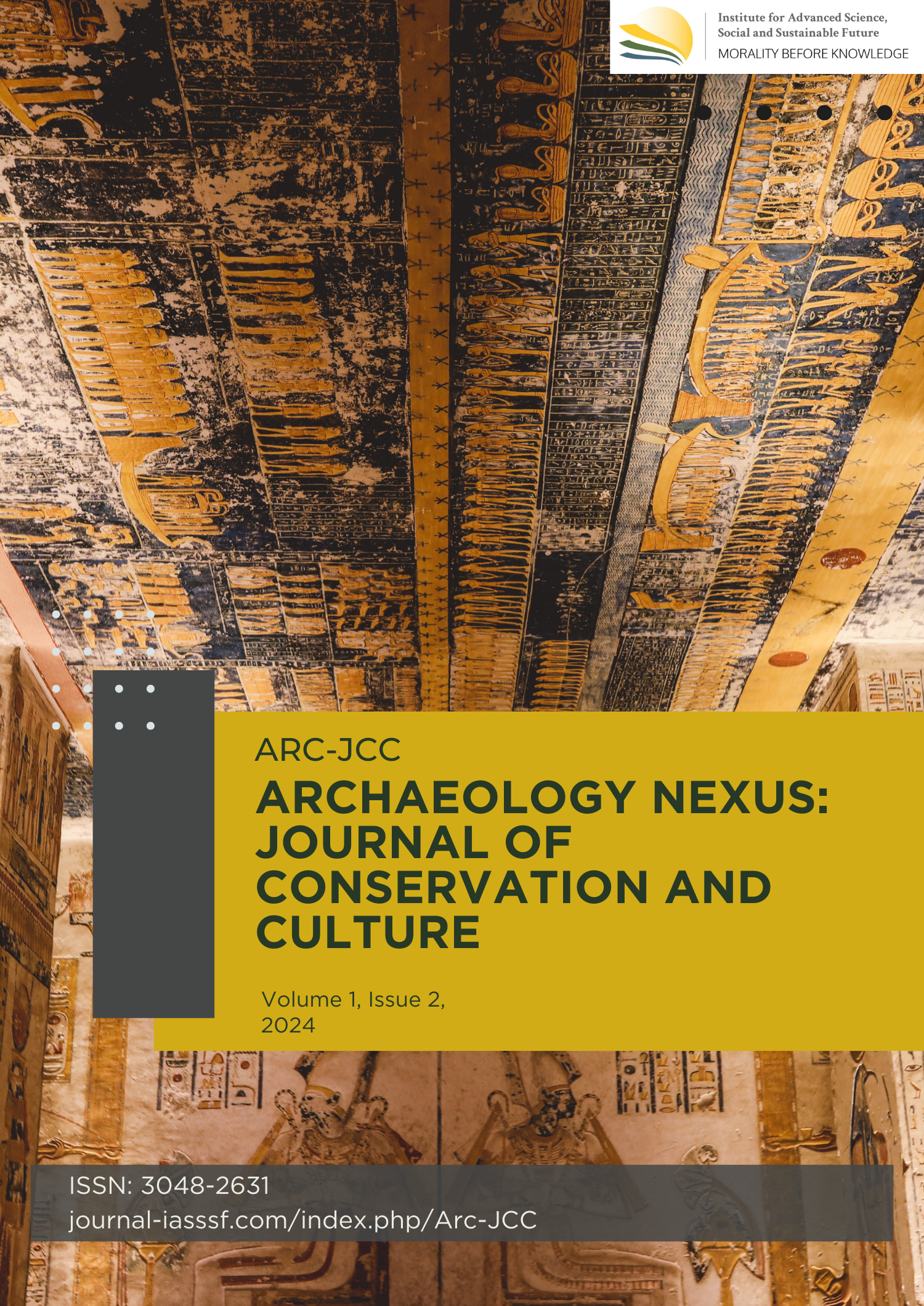
Millennial tourists' perceptions regarding the implementation of smart tourism at the national museum of Indonesia
DOI:
https://doi.org/10.61511/arc-jcc.v1i2.2024.2418Keywords:
Indonesian national museum, millennial generation, smart tourism, tourist perceptionAbstract
Background: Jakarta, as the nation's capital, has great potential in developing historical and cultural tourism. One place that has undergone transformation is the National Museum of Indonesia, which is currently implementing digital technology through the concept of smart tourism. Methods: This study uses a quantitative approach with descriptive methods. Data were obtained by distributing questionnaires to millennial tourists who have visited the museum and used the available digital facilities. Findings: Technologies such as augmented reality, video mapping, and other interactive features are used to enhance the visitor experience. This study aims to determine how millennial tourists perceive the implementation of smart tourism at the National Museum of Indonesia. Conclusion: The results show that millennial tourists responded positively to the implementation of technology, especially in terms of information clarity and interactivity. However, there are still several things that need to be improved, such as personalization of the experience and ease of access to digital features. Novelty/Originality of this article: These findings can be input for museum managers in developing a smart tourism concept that is more suited to visitor needs. In addition, this study also adds to the reference study on the application of technology in managing cultural destinations in Indonesia.
References
Akib, E. (2020). Pariwisata dalam tinjauan pendidikan: Studi menuju era revolusi industri. PUSAKA: Journal of Tourism, Hospitality, Travel and Business Event, 2(1), 1-8. https://doi.org/10.33649/pusaka.v2i1.40
Anggani, M. F. & Febrianto, I. G. A. (2024). Trust among millennial generation domestic travelers in staying at eco-friendly hotels. Jurnal Pariwisata Pesona, 9(2), 188-197. https://jurnal.unmer.ac.id/index.php/jpp/article/view/14123
Badan Pusat Statistik DKI Jakarta. (2024). Perkembangan Pariwisata Provinsi DKI Jakarta Desember 2023. Badan Pusat Statistik DKI Jakarta.
Damartiasari, A. F. (2017). Persepsi Pengunjung Terhadap Daya Tarik Taman Wisata Alam Hutan Rimbo Tujuh Danau di Desa Wisata Buluh Cina Kecamatan Siak Hulu Kabupaten Kampar Riau. JOM FISIP, 4(2). https://jom.unri.ac.id/index.php/JOMFSIP/article/view/16220
Damayanti, R. A. & Puspitasari, A. Y. (2024). Kajian potensi daya tarik wisata heritage di Indonesia. Jurnal Kajian Ruang, 4(1). http://dx.doi.org/10.30659/jkr.v4i1.36639
Faturrachman, A., Sudiarta, I. N. & Suardana, I. W. (2024). Pengaruh motivasi wisatawan nusantara terhadap niat berkunjung kembali ke Pantai Pandawa, Bali. Jurnal IPTA (Industri Perjalanan Wisata), 12(2). https://doi.org/10.24843/IPTA.2024.v12.i02.p01
Galvão, A., Brito e Abreu, F. & Joanaz de Melo, J. (2025). Toward a consensual definition for smart tourism and smart tourism tools. In: E. Kornyshova, R. Deneckere & S. Brinkkemper, eds. Smart Life and Smart Life Engineering, 153-183. https://doi.org/10.48550/arXiv.2402.10830
Gretzel, U., Sigala, M., Xiang, Z., & Koo, C. (2015). Smart tourism: Foundations and developments. Electronic Markets, 25(3), 179–188. https://doi.org/10.1007/s12525-015-0196-8
Hakim, I. N. (2019). Media promosi yang ramah wisatawan milenial (Millennial Tourist Friendly Promotional Media). Jurnal Kepariwisataan Indonesia, 13(2), 1–23. https://ejournal.kemenparekraf.go.id/index.php/jki/article/view/80
Ichsan, R. N., Laratmase, P., Novedliani, R., Utami, E. Y. & Mahmudin, T. (2024). Digitalisasi destinasi sebagai strategi pengembangan promosi pariwisata di Indonesia. Edunomika, 8(2). https://doi.org/10.29040/jie.v8i2.13318
Ismail, N., Som, A. P. M., & Hanafiah, M. H. (2025). Profiling the Millennial Visitors of the Smart Museum and Satisfaction of Visit: A Case Study of the Borneo Culture Museum, Sarawak Malaysia. Information Management and Business Review, 17(1), 87-100. https://doi.org/10.22610/imbr.v17i1(I)S.4441
Ministry of Tourism and Creative Economy. (2023). Press Release: Jakarta Named One of Lonely Planet's Must-Visit Cities for 2024. Ministry of Tourism and Creative Economy.
Prayag, G., Hosany, S., & Odeh, K. (2017). Understanding the relationships between tourists’ emotional experiences, perceived overall image, satisfaction, and intention to recommend. Journal of Travel Research, 56(1), 41–54. https://journals.sagepub.com/doi/10.1177/0047287515620567
Robaina-Calderín, L., Martín-Santana, J. D. & Muñoz-Leiva, F. (2023). Immersive experiences as a resource for promoting museum tourism in the Z and millennial generations. Journal of Destination Marketing & Management, 29(1), 100795. https://doi.org/10.1016/j.jdmm.2023.100795
Saputra, G. A., Laba, I. N. & Muliadiasa, I. K. (2024). Persepsi wisatawan domestik terhadap daya tarik wisata ditinjau dari komponen 4A. Jurnal Ilmiah Pariwisata dan Bisnis, 3(1), 8-21. https://doi.org/10.22334/paris.v3i1.678
Shafiee, S., Ghatari, A. R., Hasanzadeh, A., & Jahanyan, S. (2022). Developing a model for smart tourism destinations: An interpretive structural modelling approach. Information Technology & Tourism, 24(4), 511–546. https://doi.org/10.1007/s40558-022-00240-9
Sofronov, B. (2018). Millennials: A new trend for the tourism. Annals of Spiru Haret University. Economic Series, 18(3), 123–130. https://anale.spiruharet.ro/index.php/economics/article/view/1838
Sulistiyanta, N. L., Widodo, I. W. & Suyoto, S. (2025). Implementasi aplikasi mobile untuk meningkatkan keselamatan turis di tujuan wisata berisiko tinggi. Infotek: Jurnal Informatika dan Teknologi, 8(1), 151-159. https://doi.org/10.29408/jit.v8i1.28192
Suryawan, T. G. A. W. K., Maradona, A. F. & Darma, G. S. (2025). Sustainable tourism practices and strategies in living museum management: A meta-synthesis systematic review. MIX: Jurnal Ilmiah Manajemen, 15(1), pp.58-95. https://doi.org/10.22441/jurnal_mix.2025.v15i1.005
Tussyadiah, I. (2020). A review of research into automation in tourism: Launching the Annals of Tourism Research Curated Collection on Artificial Intelligence and Robotics in Tourism. Annals of Tourism Research, 81, 102883. https://doi.org/10.1016/j.annals.2020.102883
Widyanaputri, I. A. M., Utami, N. W. & Dewi, P. A. C. (2024). Digitalisasi desa wisata untuk optimalisasi promosi pariwisata dan budaya di Desa Batuan Kabupaten Gianyar. AJAD: Jurnal Pengabdian Kepada Masyarakat, 4(2), pp.1-10. https://doi.org/10.59431/ajad.v4i2.348
Yang, X., & Zhang, L. (2022), "Smart tourism technologies towards memorable experiences for museum visitors". Tourism Review, 77(4), 1009-1023. https://doi.org/10.1108/TR-02-2022-0060
Yulianti, W., Sulistijono, E. A. & Veranita, M. (2024). Penerapan smart tourism di Indonesia: Implementation of smart tourism in Indonesia. Jurnal Managemen dan Bisnis Visioner, 13(1), 113-121. https://doi.org/10.52630/jmbv.v13.i01.16
Zhang, R., & Abd Rahman, A. (2022). Dive in the flow experience: millennials’ tech-savvy, satisfaction and loyalty in the smart museum. Current Issues in Tourism, 25(22), 3694–3708. https://doi.org/10.1080/13683500.2022.2070459
Zubitashvili, T. (2024). The role of museums for the issue of tourism development. Sciental Journal of Education Humanities and Social Sciences, 2(1), 25-30. https://doi.org/10.62536/sjehss.v2i1.9
Downloads
Published
How to Cite
Issue
Section
Citation Check
License
Copyright (c) 2025 Anisatul Auliya, Rafina Allynda Putri, Gavina Aprillia Tamar, Nadia Aulanur Kartikasari, Maghfira Izzani

This work is licensed under a Creative Commons Attribution 4.0 International License.