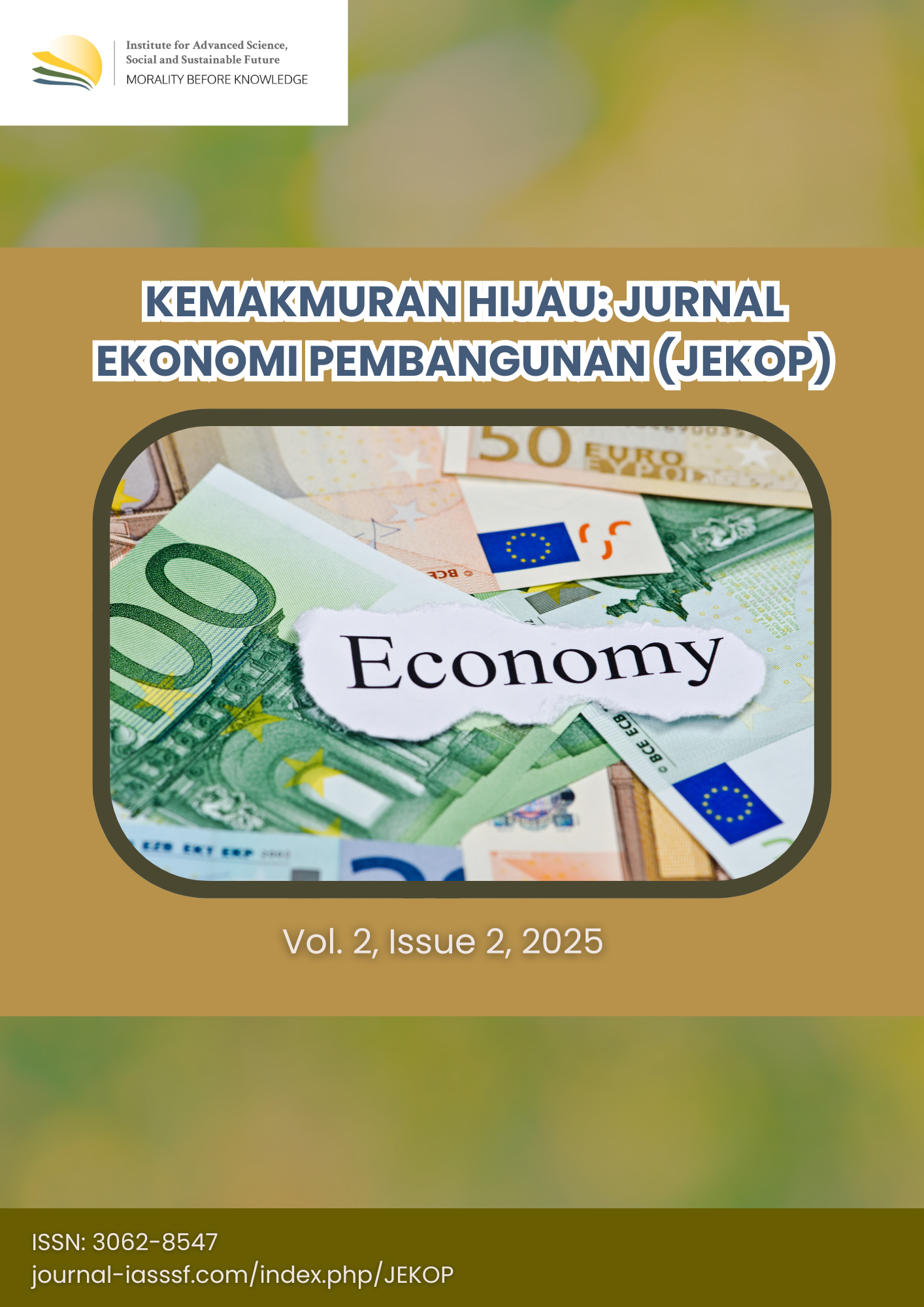
Evaluation, supervision, and accountability for sustainable education financing governance
DOI:
https://doi.org/10.61511/jekop.v2i2.2025.2660Keywords:
education, evaluation, financingAbstract
Background: Evaluation, supervision, and accountability are essential foundations for effective, efficient, transparent, and sustainable governance of educational funding. Strengthening these functions is particularly important for maintaining public trust and sustaining long-term educational quality and institutional resilience in Indonesia. Methods: This study used a descriptive-analytical approach to examine three key aspects of sustainable educational funding governance: the concept and function of supervision, control mechanisms to ensure effective and sustainable program implementation, and the forms and standards of financial accountability. Findings: Supervision serves as a managerial instrument to ensure consistency between educational planning and budget realization, while control functions as a corrective mechanism that maintains the quality, efficiency, and sustainability of program implementation. Financial accountability is demonstrated through the Rencana Kegiatan Anggaran Sekolah (RKAS), the school activity and budget plan; budget realization reports; and internal and external audits. Integrating these mechanisms strengthens transparency, compliance, and responsible, sustainable financial management. Conclusion: Synergy among evaluation, supervision, control, and accountability is a fundamental prerequisite for improving the sustainable governance of educational funding, strengthening public trust, and supporting the long-term sustainability of educational quality in Indonesia. Novelty/Originality of this article: This study emphasizes an integrated governance framework that links supervision, control, and accountability as mutually reinforcing mechanisms to strengthen sustainable educational funding management and institutional accountability.
References
Asis, M. D., Edpalina, F. M. C., Naguiat, A. K. C., Padilla, C. A. E., Panganiban, K. C., & Gadia, E. D. (2026). Green accounting practices in philippine higher education: A mixed-method case study of institutional readiness at a local government college. International Journal of Multidisciplinary: Applied Business and Education Research, 7(3), 1445-1459. https://doi.org/10.11594/ijmaber.07.03.31
Baidowi, A., Ma, C., Rahmah, R. A., Nadzyra, T. R., Mawalita, W., Tinggi, S., Islam, A., & Thawalib, P. (2024). Educational financial management in providing school needs. (2024). Mudir: Jurnal Manajemen Pendidikan, 6(1). https://doi.org/10.55352/mudir.v6i1.829
Dirkse van Schalkwyk, R., & van Antwerpen, S. (2025). Developing a theoretical service quality framework for a student funding system. Improvement: Jurnal Ilmiah Untuk Peningkatan Mutu Manajemen Pendidikan, 12(1), 31–46. https://doi.org/10.21009/improvement.v12i1.53981
Elmi, F., & Librianty, N. (2023). Improving the quality of educational human resources to achieve Indonesia's vision 2045. Jurnal Apresiasi Ekonomi, 11(3), 730-737. https://doi.org/10.31846/jae.v11i3.714
Farmer, S., & Weber, R. (2022). Education reform and financialization: Making the fiscal crisis of the schools. International Journal of Urban and Regional Research, 46(6), 911-932. https://doi.org/10.1111/1468-2427.13137
Gbadeyan, O. J., Muthivhi, J., Linganiso, L. Z., & Deenadayalu, N. (2024). Decoupling economic growth from carbon emissions: A transition toward low-carbon energy systems—a critical review. Clean Technologies, 6(3), 1076-1113. https://doi.org/10.3390/cleantechnol6030054
Huda, M. N., Kurniasari, E. N. ., & Ruroh, S. M. . (2022). A systematic literature review of e-government evaluation. Journal of Local Government Issues (LOGOS), 5(1), 32-48. https://doi.org/10.22219/logos.v5i1.19784
Handayani, N. F., & Huda, N. (2020). Manajemen pembiayaan pendidikan di sma negeri pascadesentralisasi pendidikan. JAMP : Jurnal Administrasi Dan Manajemen Pendidikan, 3(4), 332–341. Retrieved from https://journal-fip.um.ac.id/index.php/jamp/article/view/1795
Indrawati, S. M., & Kuncoro, A. (2021). Improving competitiveness through vocational and higher education: Indonesia’s vision for human capital development in 2019–2024. Bulletin of Indonesian Economic Studies, 57(1), 29–59. https://doi.org/10.1080/00074918.2021.1909692
Inesa, M., Viktor, K., Galyna, S., Oksana, G., & Rima, T. (2021). Green economy in sustainable development and. Central European Business Review, 10(1), 99–113. https://doi.org/10.18267/j.cebr.252
Joshi, B. M. (2023). Trends in budgeting in the education sector of Nepal. Interdisciplinary Research in Education, 8(2), 146-154. https://doi.org/10.3126/ire.v8i2.60233
Kartiko, A., Rofiq, A., Rokhman, M., Kartika, & Ritonga, M. (2024). Character education management in Tawar Mojokerto public primary schools. ZAHRA: Research and Tought Elementary School of Islam Journal, 5(2), 121-136. https://doi.org/10.37812/zahra.v5i2.1464
Kaushiva, A. (2025). Green economic transition and green skills : A pathway for sustainable development. Shanlax International Journal of Economics 13(3), 71–78. https://doi.org/10.34293/economics.v13i3.8611
Kawuryan, S. P., Sayuti, S. A., & Dwiningrum, S. I. A. (2021). Teachers' quality and educational equality achievements in Indonesia. International Journal of Instruction, 14(2), 811-830. https://doi.org/10.29333/iji.2021.14245a
Kurrohman, T., & Oktaviani, S. A. (2025). Strengthening local government's role in implementing sustainable budgeting through environment-based budgeting in Indonesia. EKUITAS (Jurnal Ekonomi dan Keuangan), 9(3), 460-476. https://doi.org/10.24034/j25485024.y2025.v9.i3.7196
Liu, Y., & Sander, M. (2026). What drives energy efficiency in the G20? Evidence from finance, education, and sustainable development. Sustainable Development, 34(2), 1838-1855. https://doi.org/10.1002/sd.70437
Lubis, M. F., Mais, R. G., Ardheta, P. A., Mulyati, A., & Maliki, F. (2024). Analysis of accountability and transparency in the management of school operational assistance funds. Taxation and Public Finance, 1(2), 83–94. https://doi.org/10.58777/tpf.v1i2.243
Mariani, A., Warlizasusi, J., Usman, M. U. K., & Harahap, E. K. (2025). Principal supervision in improving the quality of learning administration services at the state islamic elementary school. Kharisma: Jurnal Administrasi Dan Manajemen Pendidikan, 3(2), 135–148. https://doi.org/10.59373/kharisma.v3i2.53
Mehan, S. K., Herdi, H., & Salvanos, Y. Y. (2024). Analysis of accountability and transparency in the management of school operational assistance (bos) funds at SDK 037 Nanga. Accounting UNIPA - Jurnal Akuntansi, 3(1). https://doi.org/10.59603/accounting.v3i1.240
Mohamad, D., Sanggoro, H. B., Rustendi, I., & Pramono, S. A. (2022). The world bank-environment and social framework: Expectations and realities of implementing environmental and social safeguards in infrastructure projects in Indonesia. International Journal of Sustainable Development and Planning, 17(1), 225-234. https://doi.org/10.18280/ijsdp.170122
Munjiah, S. & Daud, R.M. (2024). Akuntabilitas dan transparansi pengelolaan dana BOS di sekolah dasar negeri. JIMTEK: Jurnal Ilmiah Mahasiswa Ekonomi Akuntansi, 9(4).284-293. https://doi.org/10.24815/jimeka.v9i4.28448
van Niekerk, A. J. (2024). Economic Inclusion: Green Finance and the SDGs. Sustainability, 16(3), 1128. https://doi.org/10.3390/su16031128
Putri, V. P. S., Suhartini, D., & Widoretno, A. A. (2021). Implementasi green accounting berbasis university social responsibility (USR). BALANCE: Economic, Business, Management and Accounting Journal, 18(2), 72–79. https://doi.org/10.30651/blc.v18i2.8384
Ritonga, M. (2025). Lembaga pembiayaan pendidikan dalam mewujudkan pendidikan yang inklusif dan berkelanjutan di Indonesia. Misykat al-Anwar: Jurnal Kajian Islam dan Masyarakat 8(1):105-124. https://doi.org/10.24853/ma.8.1.105-124
Sari, Y. K. S., Ach. Zahri NA, & Ali Nurhadi. (2025). Building an ideal library: Managing funding and improving library services in schools. Jurnal Manajemen Pendidikan Islam Darussalam, 7(2), 212–224. https://doi.org/10.30739/jmpid.v7i2.3970
Siska, E., Irawan, R. L., Lestari, T., Rahayu, S. & Alfita, A. K. (2025). The impact of green bond and green budget tagging on sustainable development moderated by regulatory quality: evidence from Indonesia. TIN: Terapan Informatika Nusantara, 6(5).492-502. https://doi.org/10.47065/tin.v6i5.8383
Sulistyo, D. B., Nufus, D. M. K., Hidayah, A., Rochmawati, N. I., & Septiani, S. (2026). Transparansi dan akuntabilitas pengelolaan dana bantuan operasional sekolah (BOS) di Indonesia: Systematic literature review. Jurnal Ilmiah Multidisiplin Mahasiswa Dan Akademisi , 1(6), 90-105. https://doi.org/10.64690/intelektual.v1i6.586
Sumiyana, S., & Effendi, R. (2024). Indonesia’s education budgeting system denoting low adaptiveness: Functionalistm analysis. Cogent Social Sciences, 10(1). https://doi.org/10.1080/23311886.2024.2393870
Syahrizal, W. (2024). Implementation of school financial management function. El-Nizami: Jurnal Manajemen Pendidikan 1(2). https://doi.org/10.61992/el-nizami.v1i2.249
Yusran, Hasibuan, E., Marsidin, S., & Rifma. (2022). Teori pengawasan pendidikan. Invention: Journal Research and Education Studies, 3(2), 71–79. https://doi.org/10.51178/invention.v3i2.699
Zheng, L., Umar, M., Safi, A., & Khaddage-Soboh, N. (2024). The role of higher education and institutional quality for carbon neutrality: Evidence from emerging economies. Economic Analysis and Policy, 81, 406-417. https://doi.org/10.1016/j.eap.2023.12.008
Zulkarnaen. (2021). Program pengawasan dalam pengembangan satuan pendidikan. Jurnal Manajemen Pendidikan Islam, 11(1), 79–89. https://doi.org/10.35673/ajmpi.v11i1.2131
Downloads
Published
Issue
Section
Citation Check
License
Copyright (c) 2025 Cholish Nur Fauzi, Fatih Shidqi Annabil, Ali Muhdi

This work is licensed under a Creative Commons Attribution 4.0 International License.